If you are interested in Dante and his masterpiece, The Divine Comedy, here are some must see websites:
Princeton Dante Project - read the entire Comedy in Italian and in Jean Hollander's excellent translation plus Dante's minor works.
Dartmouth Dante Project - "a searchable full-text database containing more than seventy on Dante's Divine Comedy."
Yale's Open Course on Dante - taught by Dante scholar Giuseppe Mazzotta
The Dante Society of America - of which I'm a proud member (but not so proud as to have to circle the first terrace of Purgatory for long!)
DivineComedy.org - read the Divine Comedy in the original Italian, 3 English translations, German, and Finnish.
The World of Dante - "a multi-media research tool intended to facilitate the study of the Divine Comedy.
Danteworlds - an interactive multimedia journey... through the three realms of the afterlife presented in Dante's Divine Comedy.
The Dante Museum in Florence - a museum in a reconstructed house on the spot where Dante lived before his exile.
AngelFire.com - a fun website with a variety of Dante related information, including a quiz on what circle of hell you'd end up in if you died today.
Renaissance Dante in Print - Dedicated to showcasing beautiful illuminated editions of the Divine Comedy from the Renaissance.
GoodReads.com - Join a discussion of the Divine Comedy online.
A Brief Timeline of Dante's Life
How Dante Saved My Life - an article by Rod Dreher relating the impact the Divine Comedy had on his life.
Youtube.com - a Series of videos on the Divine Comedy featuring art from Gustav Dore.
Dante Alighieri Wikipedia Page - for a quick overview of the man, not for an authoritative account of his life or works.
Archive.org - A Listing of Works By or About Dante and his Works
LibriVox.org - Audio books on Dante and his Works
Posts from this Blog:
The "Blogging Through Hell" Series
An Inspirational Post, urging you to read Dante.
An article on the Three Advents of Christ in Dante's Divine Comedy.
Recommended Dante Reading List
Pope Francis' call to read the Divine Comedy.
Why Dante is a "Great Read for Lent."
Why Reading Dante is a great use of your time and effort.
A Limerick inspired from Dante's Hell written on a cold winter's day.
Monday, January 30, 2017

Monday, January 23, 2017
10 Favorite Images of Jesus to Know and Share
As Catholics we know the power of images to help us draw closer to God.
And no, it isn't idolatry to use images as an aid to our worship (see my post Do Catholics Worship Statues?)
In that spirit I thought I'd share hear some of my favorite images of Christ, excluding those recognized instantly worldwide e.g. Michelangelo's Pieta and Last Judgement or Leonardo's Last Supper, and confining myself to Italian masters whose works are on public display.
I'm including:
10. Cristo morto sorretto dagli angeli; Paolo Veronese, 1528-1588 (Museum of Fine Arts, Boston, MA)
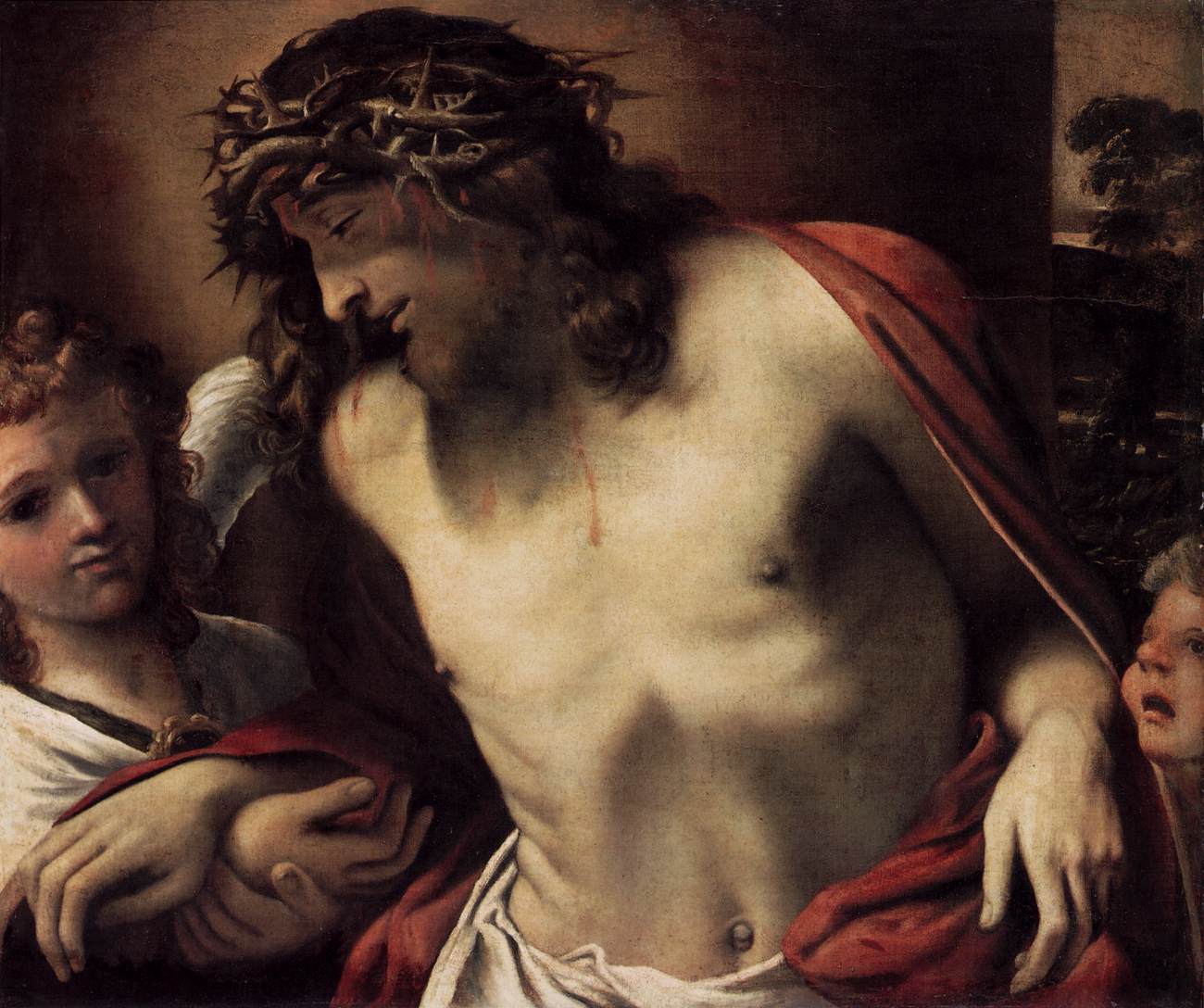
9. Cristo coronato di spine; Annibale Carracci, 1560-1609 (Gemäldegalerie Alte Meister, Dresden)
8. Testa di Cristo; Correggio, 1489-1534 (Getty Museum, Los Angeles, CA)
7. Salvator Mundi; Gianlorenzo Bernini, 1598-1680 (San Sebastiano fuori le mura; Rome, Italy)
6. Cristo morto; Andrea Mantegna, 1430-1506 (Pinacoteca di Brera, Milan, Italy)
5. Il Crocifisso; Maestro della Croce 434, mid-13th century (Uffizi, Florence, Italy)
5. Il Bacio di Guida (detail); Giotto di Bondone, 1266-1337 (Cappella degli Scrovegni, Padua, Italy)
4. Incredulità di San Tommaso; Caravaggio, 1592-1610 (Sanssouci Picture Gallery; Potsdam, Germany)
3. Il Crocifisso; Donatello, 1386-1466 (Santa Croce, Florence, Italy)
2. Testa di Cristo, Drawings, Leonardo da Vinci, 1452-1519 (from his notebooks)
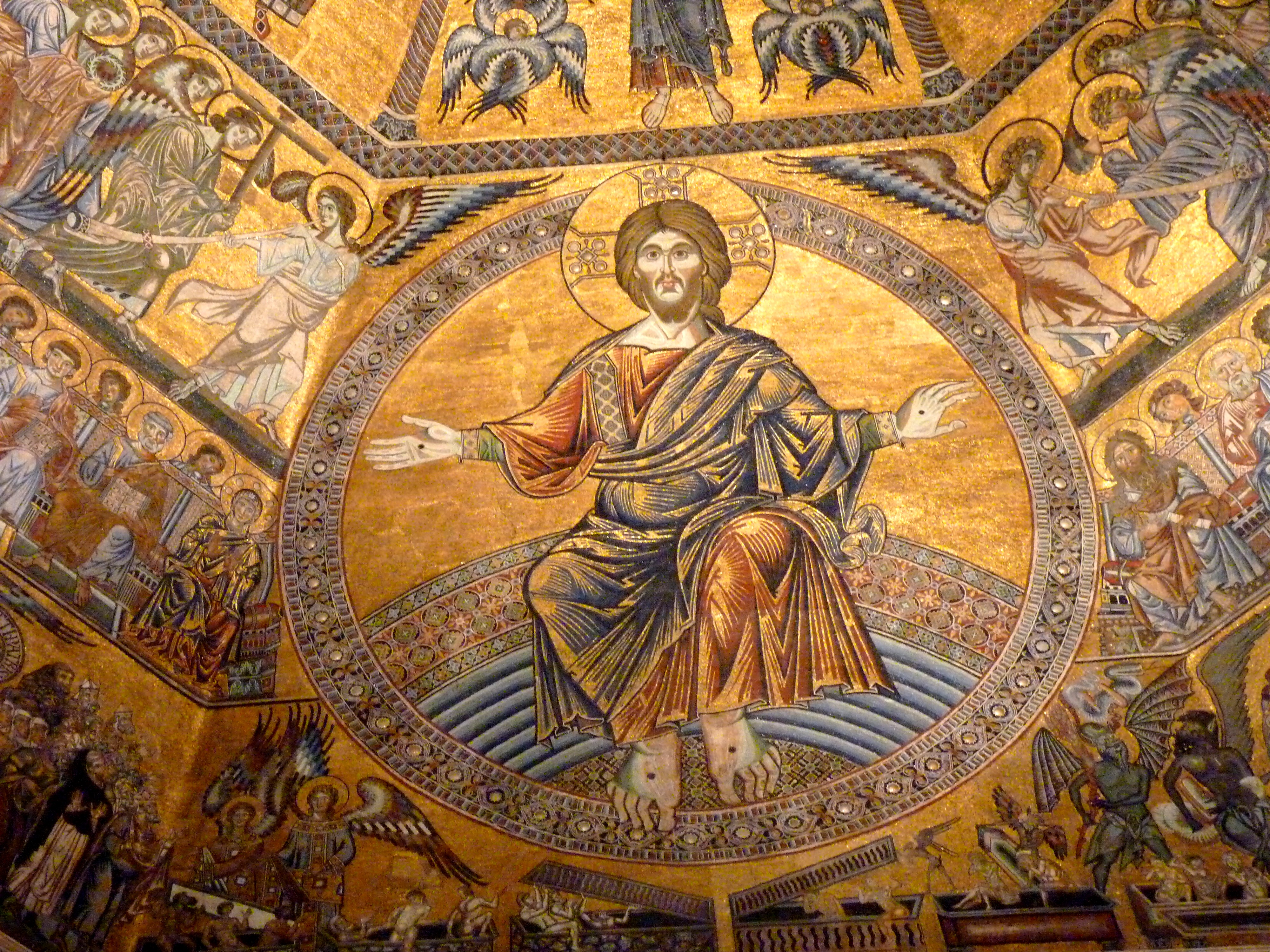
1. Giudizio Universale; Coppo di Marcovaldo, 1225-1276 (Battistero di San Giovanni, Florence, Italy)
Which of these do you like best?
What are some of your favorite depictions of Our Lord?
----
You might also enjoy these posts:
Love Catholic Art? You'll want to consider this book:
Wondering why our churches are not full of masterpieces (and why the buildings look less like houses of God and more like factories or assembly halls)? You'll want to read this book:
WANT TO MAKE SURE YOU NEVER MISS A POST?
Subscribe to my mailing list! (No spam, No sharing of emails, unsubscribe anytime):
And no, it isn't idolatry to use images as an aid to our worship (see my post Do Catholics Worship Statues?)
In that spirit I thought I'd share hear some of my favorite images of Christ, excluding those recognized instantly worldwide e.g. Michelangelo's Pieta and Last Judgement or Leonardo's Last Supper, and confining myself to Italian masters whose works are on public display.
I'm including:
- names of the artists
- original titles of the works
- where you can visit these masterpieces in persona
- dates of the master's life
You'll note all these artists all worked between 1225 and 1680, a period stretching from the revival of the arts in the High Middle Ages to the end of the Baroque. Dante tells us fame is fleeting,
Oh vana gloria de l'umane posse! com' poco verde in sul la cima dura, se non è giunta da l'etati grosse! (Purgatorio, 11.91-93)
O vanity of human powers,
how briefly lasts the crowning green of glory,
unless an age of darkness follows!
We remember these men. Whether or not we can conclude this period was therefore "an age of darkness" (the neoclassicism of the Enlightenment to modern abstract "art"), I'll leave to my readers to decide.
My personal top ten:
 |
| source |

9. Cristo coronato di spine; Annibale Carracci, 1560-1609 (Gemäldegalerie Alte Meister, Dresden)
 |
| source |
 |
| source |
#/media/File:Correggio_(Antonio_Allegri)_(Italian_-_Head_of_Christ_-_Google_Art_Project.jpg)
7. Salvator Mundi; Gianlorenzo Bernini, 1598-1680 (San Sebastiano fuori le mura; Rome, Italy)
 |
| source |

 |
| source |
#/media/File:Mantegna_Andrea_Dead_Christ.jpg)
5. Il Crocifisso; Maestro della Croce 434, mid-13th century (Uffizi, Florence, Italy)
 |
| source |

5. Il Bacio di Guida (detail); Giotto di Bondone, 1266-1337 (Cappella degli Scrovegni, Padua, Italy)
 |
| source |
4. Incredulità di San Tommaso; Caravaggio, 1592-1610 (Sanssouci Picture Gallery; Potsdam, Germany)
 |
| source |
 |
| source |
 |
| source |

1. Giudizio Universale; Coppo di Marcovaldo, 1225-1276 (Battistero di San Giovanni, Florence, Italy)
 |
| source |
Which of these do you like best?
What are some of your favorite depictions of Our Lord?
----
You might also enjoy these posts:
Love Catholic Art? You'll want to consider this book:
Wondering why our churches are not full of masterpieces (and why the buildings look less like houses of God and more like factories or assembly halls)? You'll want to read this book:
WANT TO MAKE SURE YOU NEVER MISS A POST?
Subscribe to my mailing list! (No spam, No sharing of emails, unsubscribe anytime):
Monday, January 2, 2017
What I've Read in 2016.
 |
| picture source |
If you have any questions about any of these books drop me a line in the combox and I'll try to answer all of them.
I'll be taking a break from blogging in January. See you all in February.
11. Dante: A Penguin Life - RWB Lewis
21. Inferno - Dante Alighieri (Hollander)
25. Purgatorio - Dante Alighieri (Hollander)
31. Gorgias - Plato
33. Paradiso - Dante Alighieri (Hollander)
47 Essays on Dante - Mark Musa (ed)
49 Benedict XVI, Last Testament - With Peter Seewald
55 Take Five. Mediations with Pope Benedict XVI.
Are you looking to read more in 2017? If so, here's some inspiration from the man who created Rome as we know it, Gianlorenzo Bernini:

Want to make sure you never miss a a post? Subscribe to my mailing list.
Are you looking to read more in 2017? If so, here's some inspiration from the man who created Rome as we know it, Gianlorenzo Bernini:

Want to make sure you never miss a a post? Subscribe to my mailing list.
- No Spam. Ever.
- We don't share emails, with anyone. Ever.
- Unsubscribe anytime, if you get tired of great content.
- Emails go out approximately once a week (Monday or Tuesday).
Monday, December 19, 2016
Grow in Holiness this Advent Wk 4; Round-Up
 |
| Definition via Google |
If you've been regularly following the blog this Advent, you know we've been working on becoming holier. In the last week of this season of preparation, I present to you a round-up of Advent and Christmas posts for your reflection.
Grow in Holiness this Advent Wk 1, the Three Advents of Christ
Grow in Holiness this Advent Wk 2; Conquering Conquering Covetousness
Grow in Holiness this Advent Wk 3; Confess and Rejoice!
The Hell We Choose. An Advent Call to Holiness
The Three Advents of Christ
The Three Advents of Christ in Saint Bernard
The Three Advents of Christ in Dante
Gaudete Sunday!
The Spirit of Scrooge
Pope Francis on Christmas
Pope Benedict on Christmas
Keep Christ AND Mass in Christmas
How We Keep Christ in Christmas
Santa Claus, Herald of Christmas or Anti-Christ?
Have a holy final week of Advent and a very Merry Christmas in the presence of Our Lord.
Monday, December 12, 2016
Grow in Holiness this Advent Wk 3; Confess and Rejoice!
(This is the third in a series of Advent meditations. You can read the first mediation, on the Three Advents of Christ, and the second, on Conquering Covetousness by clicking those links. This week, we're looking at another essential part of Advent -- Confession.)
It's the third week of Advent - Gaudete (Rejoice!) Sunday. This week we light the pink candle on our advent wreaths, Mass is celebrated by father in pink (sorry, rose) vestments, and we are called to Rejoice! that our Savior is near at hand.
One way to Rejoice! over the last two weeks of Advent is to make a sincere and contrite confession. Unburdening yourself of your sins and hearing the words of Christ, speaking though his priest,
Rejoice! for the healing power of Christ is still alive and active in the world.
If you are skeptical, if you are asking yourself why you ought to confess in the presence of a priest, I'll point you to my post:
Yes, that says, "All Christians," not just all Catholics.
Aside from Eastern Orthodox, we also find the value of a good auricular confession maintained, though not stressed as essential, in some Protestant traditions, especially Anglicanism and Lutheranism.
Of course, most Protestant denominations have eschewed the traditional Christian practice of confessing their sins. Some confess only "in their heart," others have abandoned confessing altogether, believing that their Faith in Jesus means they have no need of confessing their sins post-conversion. This is, as I demonstrate in the aforementioned post , is a grave misunderstanding. For, as Jesus Himself assures us
This is made wonderfully clear in The Divine Comedy. Dante, upon entering the first circle where he sees the damned being punished, meets Minos - the judge of Hell standing "orribilmente, e ringhia" ("horribly and growling"). The souls, lost for all eternity, having never confessed, having tried to keep their sins from "com(ing) to light," find themselves compelled to do what could have saved them,
Confess, rejoice, and be glad as you come closer to Christmas.
Have a holy Advent!
 |
| Picture with Story from Daily Mail - check it out HERE |
One way to Rejoice! over the last two weeks of Advent is to make a sincere and contrite confession. Unburdening yourself of your sins and hearing the words of Christ, speaking though his priest,
God, the Father of mercies, through the death and resurrection of his Son has reconciled the world to himself and sent the Holy Spirit among us for the forgiveness of sins; through the ministry of the Church may God give you pardon and peace, and I absolve you from your sins in the name of the Father, and of the Son, and of the Holy Spirit. Amen.provides, as any Catholic can tell you, a feeling of relief and joy.
Rejoice! for the healing power of Christ is still alive and active in the world.
If you are skeptical, if you are asking yourself why you ought to confess in the presence of a priest, I'll point you to my post:
Yes, that says, "All Christians," not just all Catholics.
Aside from Eastern Orthodox, we also find the value of a good auricular confession maintained, though not stressed as essential, in some Protestant traditions, especially Anglicanism and Lutheranism.
Of course, most Protestant denominations have eschewed the traditional Christian practice of confessing their sins. Some confess only "in their heart," others have abandoned confessing altogether, believing that their Faith in Jesus means they have no need of confessing their sins post-conversion. This is, as I demonstrate in the aforementioned post , is a grave misunderstanding. For, as Jesus Himself assures us
nothing is hid that shall not be made manifest, nor anything secret that shall not be known and come to light. (Lk. 8:16-17, RSV)Better to have it "come to light" in this life, in the confessional, than hiding it until all things will be dragged into the light after we have time to repent of them. We will confess our sins with repentance now or confess them unrepentant when it is too late, either way we will confess.
This is made wonderfully clear in The Divine Comedy. Dante, upon entering the first circle where he sees the damned being punished, meets Minos - the judge of Hell standing "orribilmente, e ringhia" ("horribly and growling"). The souls, lost for all eternity, having never confessed, having tried to keep their sins from "com(ing) to light," find themselves compelled to do what could have saved them,
Dico che quando l'anima mal natali vien dinanzi, tutta si confessa;e quel conoscitor de le peccatavede qual loco d'inferno è da essa.
I say, that when the ill-born spirit comes before him, it confesses all; and that sin-discerner sees what place in hell is for it (Inferno 5.7-10)Their confession is now futile.
vanno a vicenda ciascuna al giudizio, dicono e odono e poi son giù volte.
they go each in his turn to judgment; they tell, and hear; and then are whirled down. (Inferno 5.14-15)But your confession isn't futile, at least not yet.
Confess, rejoice, and be glad as you come closer to Christmas.
Have a holy Advent!
And behold I am coming soon (Rev. 22:7, RSV)Books Mentioned or Recommended in this Post:
Monday, December 5, 2016
Grow in Holiness this Advent Wk 2; Conquering Covetousness

In Dicken's A Christmas Carol we meet the embodiment of Avarice, Ebenezer Scrooge, a man who loved gold more than God. His opinion of Christmas is well known to us all,
Merry Christmas! Out upon a merry Christmas! What's Christmas time to you but a time for paying bills without money; a time for finding yourself a year older, but not an hour richer; a time for balancing your books and having every item in 'em through a round dozen of months presented dead against you? If I could work my will... every idiot who goes about with 'Merry Christmas' upon his lips, should be boiled with his own pudding, and buried with a stake of holly through his hear. He should! (pp. 5-6)Scrooge's love for money has replaced not only his love of Christmas, but love of anything else. This love of money isn't just greed, it is a false religion.
Dante dramatically presents this reality to us when he stands before the damned Pope Nicholas III (Giovanni Gaetano Orsini),
Fatto v'avete dio d'oro e d'argento;e che altro è da voi a l'idolatre,se non ch'elli uno, e voi ne orate cento?
You have wrought yourselves a god of gold and silver.St. Thomas Aquinas addresses the "spirit of Scrooge" in the Summa
How then do you differ from those who worship idols
except they worship one and you a hundred? (Inferno 19.112-114)
man seeks, according to a certain measure, to have external riches, in so far as they are necessary for him to live in keeping with his condition of life. Wherefore it will be a sin for him to exceed this measure, by wishing to acquire or keep them immoderately. This is what is meant by covetousness, which is defined as "immoderate love of possessing." It is therefore evident that covetousness is a sin. (II-II. Q. 118, A. 1)Or, in the more recent words of Pope Benedict XVI
Material possessions, in themselves, are good. We would not survive for long without money, clothing, and shelter. We must eat in order to stay alive. Yet if we are greedy, if we refuse to share what we have with the hungry and the poor, then we make our possessions into a false god. How many voices in our materialist society tell us that happiness is to be found by acquiring as many possessions and luxuries as we can! But this is to make possessions into a false god. (Address to Disadvantaged Youth, in Sydney, Australia.)How tempting it is this time of year, especially for those who ignore Advent, focusing solely on the "shopping season" of the secular Christmastide - Black Friday through December 24th, to focus overly much on possessions. Indeed, admirably, much of this is the opposite of what Scrooge lived for. He wanted only to take, to increase, while ignoring those others about him. We rather look to purchase things for others, for those we love and cherish. However, this Advent I would recommend to you to take it one step further - give to someone in need. Not just through an organization, great and commendable as that may be, but directly, personally. How can you find such people? Contact your parish, they'll point you in the right direction. For Scrooge himself began to recognize this. While haunted by the Ghost of Christmas Past, upon seeing his younger self, he remembers a small boy who had earlier began singing God bless you, merry gentlemen! May nothing you dismay! at his keyhole. Scrooge's reaction?
Scrooge seized the ruler with such energy of action, that the singer fled in terror, leaving the keyhole to the fog and even more congenial frost. (p. 9)His later reaction to his behavior?
'I wish,' Scrooge muttered, putting his hand in his pocket, and looking about him, after drying his eyes with his cuff: 'but it's too late now.'We might not have the poor singing carols at our doors, but they might be a lot closer than you think.
'What is the matter?' asked the Spirit.
'Nothing,' said Scrooge. 'Nothing. There was a boy singing a Christmas Carol at my door last night. I should have liked to have given him something: that's all.' (p. 26)
If that isn't enough to motivate you, remember how Jesus, "the reason for the season," identifies Himself with the poor,
Come, you who are blessed by my Father, inherit the kingdom prepared for you... For I was hungry and you gave me food, I was thirsty and you gave me drink, I was a stranger and you welcomed me, I was naked and you clothed me, I was sick and you visited me, I was in prison and you came to me.... Truly, I say to you, as you did it to one of the least of these my brothers, you did it to me. (Matt. 25:34-40, ESV)Have a holy Advent.
Come, Lord Jesus! The grace of the Lord Jesus be with all. Amen. (Rev. 22:20-21, ESV)Books Mentioned or Recommended in this Post:
Monday, November 28, 2016
Grow in Holiness this Advent, the Three Advents of Christ
Yesterday, the Church's liturgical year began anew with the first Sunday of Advent. This is a time of preparation, though not penance, for the coming of the great feast of the Nativity of Our Lord. Just as Lent precedes Easter, so too does Advent precede Christmas.
We can all understand the power a good Lent has to make Easter truly celebratory. But many Catholics have lost a real sense of Advent as it has been trampled under the shopping frenzy that is the secular build-up to the feast.
What is Advent Anyhow?
As a refresher for those who might not be sure what exactly Advent is and what we are supposed to be doing, I direct you to the Catholic Encyclopedia:
What Are We to Dwell on During Advent?
With Christmas on the horizon it is easy enough to look back on the first coming of Christ, His birth into our sinful world on the first Christmas.
With the Feast of Christ the King behind us, hopefully, it is easy to keep in mind the final coming of Christ, that as the just judge at the world's end.
How different these advents are!
Perhaps no one has laid bare just what Christ's first advent really was better than C.S. Lewis,

And isn't growing closer to Jesus - i.e. growing in holiness - the real "reason for the season?"
For a detailed look at the Three Advents of Christ in Dante's Comedy, I highly recommend Mark Musa's Advent at the Gates.
For a deep meditation of the Nativity of Christ, I highly recommend Pope Benedict XVI's Jesus of Nazareth: The Infancy Narratives.
----------------------
Books Mentioned or Recommended in this Post:
Emails go out about once a week, usually on Monday or Tuesday.
NO Spam, EVER.
Unsubscribe anytime.
We can all understand the power a good Lent has to make Easter truly celebratory. But many Catholics have lost a real sense of Advent as it has been trampled under the shopping frenzy that is the secular build-up to the feast.
What is Advent Anyhow?
As a refresher for those who might not be sure what exactly Advent is and what we are supposed to be doing, I direct you to the Catholic Encyclopedia:
with Advent the ecclesiastical year begins in the Western churches. During this time the faithful are admonished
Advent, then, is a time to focus on the coming of Jesus. This is made clear in the name itself. "Advent" comes from the Latin "ad-venio" meaning "come to" or "coming."• to prepare themselves worthily to celebrate the anniversary of the coming into the world as the God of love,
• thus to make their souls fitting abodes for the coming in Holy Communion and through grace, and
• thereby to make themselves ready for His final coming as, at death and at the end of the world.
What Are We to Dwell on During Advent?
With Christmas on the horizon it is easy enough to look back on the first coming of Christ, His birth into our sinful world on the first Christmas.
With the Feast of Christ the King behind us, hopefully, it is easy to keep in mind the final coming of Christ, that as the just judge at the world's end.
How different these advents are!
Perhaps no one has laid bare just what Christ's first advent really was better than C.S. Lewis,
Enemy-occupied territory - that is what this world is. Christianity is the story of how the rightful king has landed, you might say landed in disguise, and is calling us all to take part in a great campaign of sabotage. When you go to church you are really listening-in to the secret wireless from our friends: that is why the enemy is so anxious to prevent us from going. (Mere Christianity).Compare that to Christ the All Powerful King, best presented, perhaps, by Michelangelo Buonarroti,

Not exactly landing "in disguise" this time is He?
There is, however, a third advent of Christ that we all would do well to ponder over the next four weeks. If the Nativity is the First Advent and the Last Judgement is the Final Advent, this other advent is one that occurs not once in the past or in the future, but each and every day in the heart of all believers and thus is the most important advent of all to dwell on during this season.
With that teaser, I'll direct you to:
a post I wrote on St. Bernard of Clairvaux's description of the Three Advent's of Christ and, once you've digested Bernard,
And I will encourage you to:
use Dante' Divine Comedy as an Advent mediation on the Three Advents of Christ, each of which is "hidden" in the poem (don't worry you won't have to find them, I lay them all out HERE).
How is this Supposed to Make me Holier this Advent?
In a word, meditation. While the word "meditation" frequently brings to mind certain "mind-clearing" techniques used in eastern religions, there is an authentic and very important form of meditation in our Christian tradition stretching back to the first centuries after Christ. This is laid out by the Congregation for the Doctrine of the Faith in a 1989 letter to bishops (under the signature of then Cardinal Ratzinger, our present Pope Emeritus).
The meditation of the Christian in prayer seeks to grasp the depths of the divine in the salvific works of God in Christ, the Incarnate Word, and in the gift of his Spirit. These divine depths are always revealed to him through the human-earthly dimension. Similar methods of meditation, on the other hand, including those which have their starting-point in the words and deeds of Jesus, try as far as possible to put aside everything that is worldly, sense perceptible or conceptually limited. It is thus an attempt to ascend to or immerse oneself in the sphere of the divine, which, as such, is neither terrestrial, sense-perceptible nor capable of conceptualization. (Letter on Some Aspects of Christian Meditation).
Advent, being a time a quiet reflection and prayer, is the perfect time to delve into this tradition. As stated by the CDF, Christian meditation differentiates itself from eastern meditation in that the Christian is meditating on some aspect of his faith while the eastern mystic is clearing his mind of everything. GK Chesterton brings out this difference,
No two ideals could be more opposite than a Christian saint in a Gothic cathedral and a Buddhist saint in a Chinese temple. The opposition exists at every point; but perhaps the shortest statement of it is that the Buddhist saint always has his eyes shut, while the Christian saint always has them very wide open. The Buddhist saint has a sleek and harmonious body, but his eyes are heavy and sealed with sleep. The medieval saint’s body is wasted to its crazy bones, but his eyes are frightfully alive. There cannot be any real continuity between forces that produce symbols so different as that. Granted that both images are extravagances, are perversions of the pure creed, it must be a real divergence which could produce such opposite extravagances. The Buddhist is looking with a peculiar intentness inwards. The Christian is staring with a frantic intentness outwards. (Orthodoxy, p. 194)By meditating on this great mystery, the coming of God-in-the-Flesh, you can grow closer to Jesus, the perfect preparation to celebrate His Nativity.
And isn't growing closer to Jesus - i.e. growing in holiness - the real "reason for the season?"
Have a Holy Advent!
For a detailed look at the Three Advents of Christ in Dante's Comedy, I highly recommend Mark Musa's Advent at the Gates.
For a deep meditation of the Nativity of Christ, I highly recommend Pope Benedict XVI's Jesus of Nazareth: The Infancy Narratives.
----------------------
Books Mentioned or Recommended in this Post:
Emails go out about once a week, usually on Monday or Tuesday.
NO Spam, EVER.
Unsubscribe anytime.
Subscribe to:
Posts (Atom)